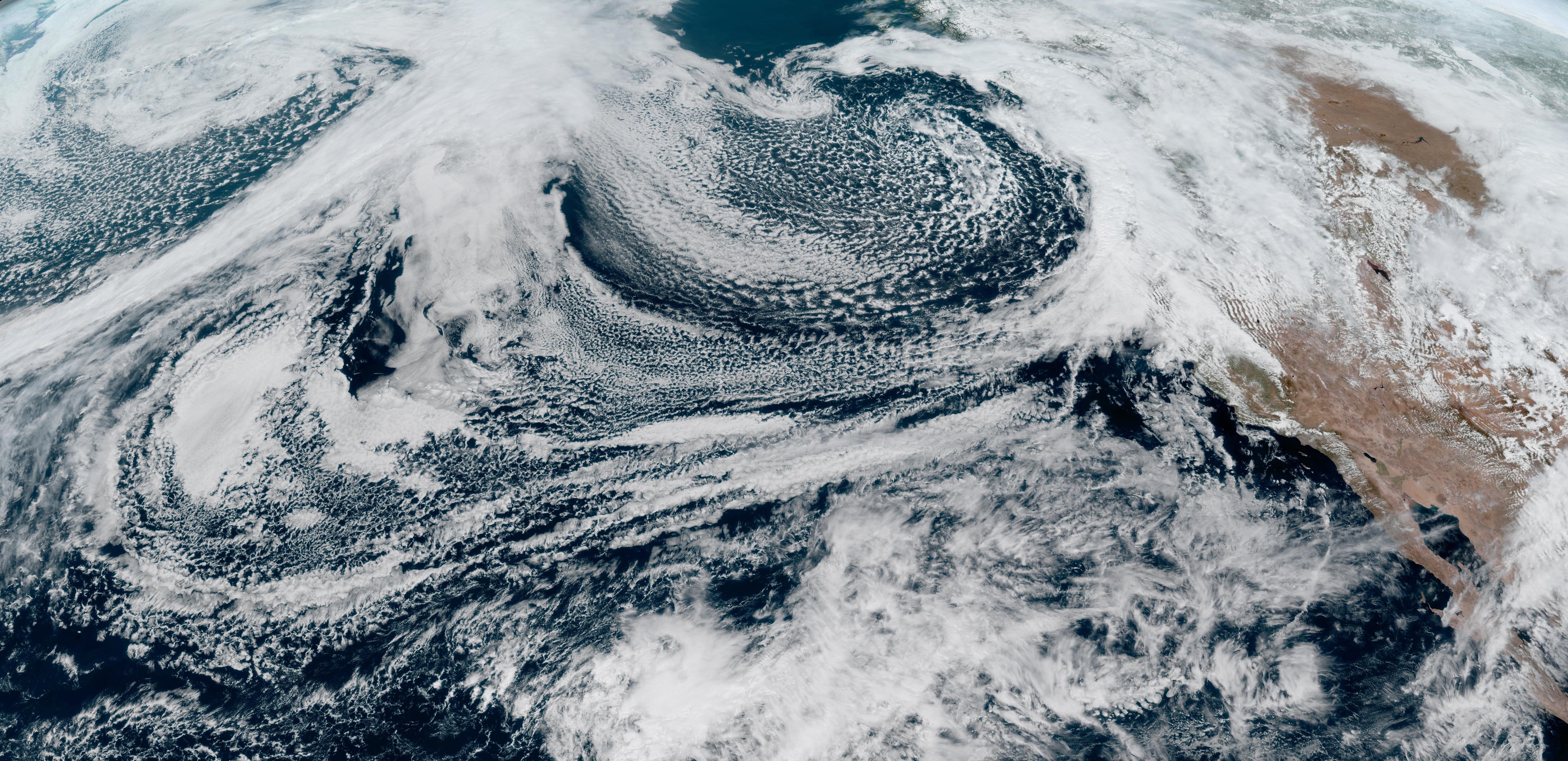
How storms shape climate
Marc Federer
GOES-18 ABI GeoColor · NOAA/NESDIS
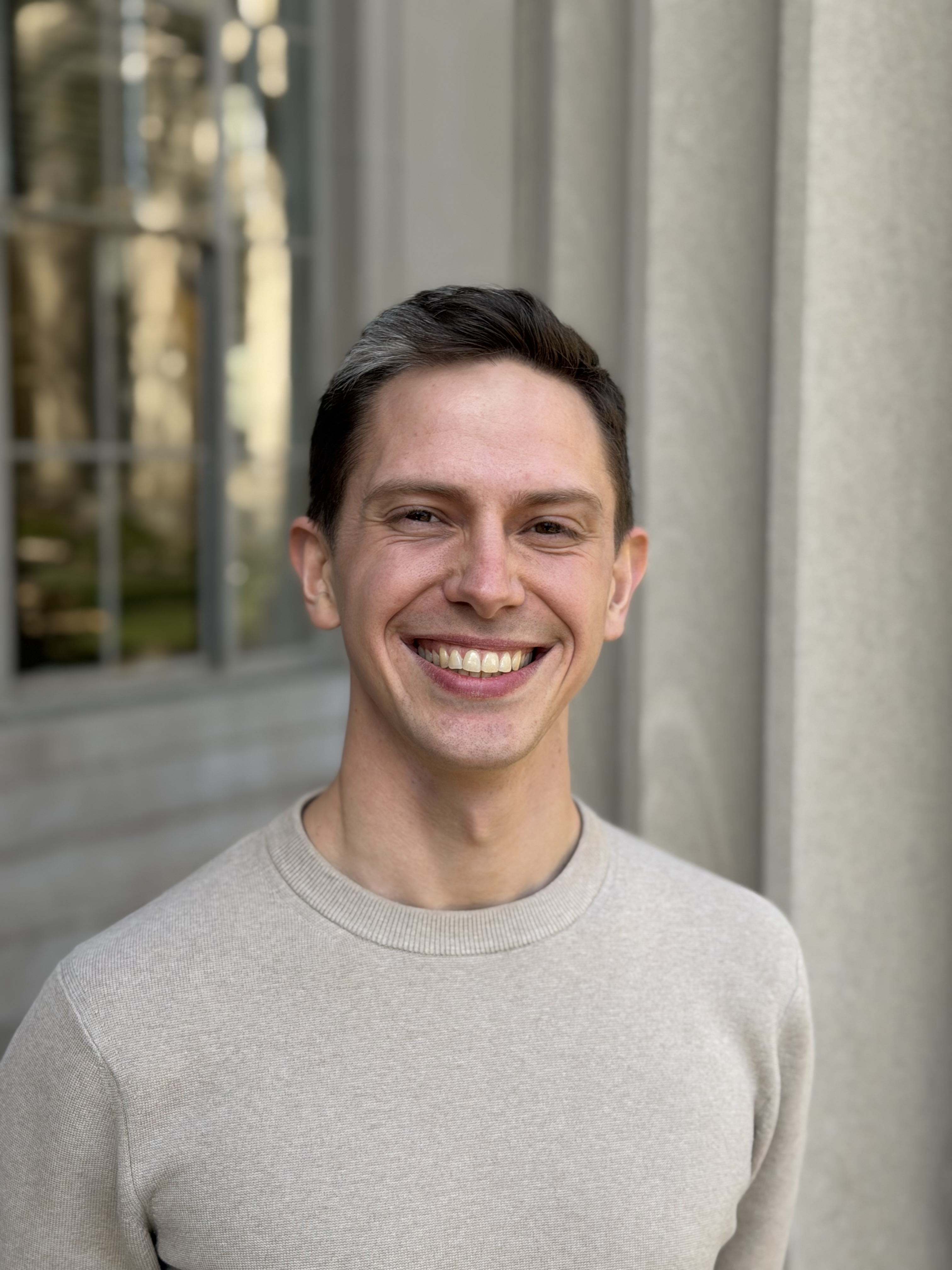
I am a Postdoctoral Fellow in the Department of Earth, Atmospheric, and Planetary Sciences at MIT. I study how organized weather systems shape the large-scale circulation and its variability.
My approach draws on theory, reanalysis data, and idealized modeling. I am particularly interested in how individual weather systems organize energy and moisture transport, how latent heating modifies Rossby wave dynamics, and what this means for climate projections and extreme weather prediction.
Storm tracks · Diabatic heating · Extreme Weather · Predictability
The midlatitude storm tracks carry most of the atmosphere's poleward energy and moisture transport, and their behavior has direct consequences for regional weather and climate. A key open question is how moisture modifies the storm tracks. Latent heating fuels cyclones, reshapes how Rossby waves propagate and break, and influences whether the flow organizes into persistent patterns like blocking or cyclone clustering. Despite its importance, this interplay between moisture and dynamics is a major source for uncertainy in numerical weather prediction and remains one of the largest sources of disagreement among climate models when projecting how storm tracks will shift in a warmer world.
At MIT, I work on isolating and understanding these moist dynamical pathways using a combination of theory, reanalysis diagnostics, and idealized model experiments.
The general circulation is maintained by converting available potential energy into kinetic energy. Textbook descriptions treat this as a global, time-mean process, but in reality most of the conversion happens inside individual cyclones as they intensify. During my PhD, I developed a framework that makes this connection explicit: it makes use of a local measure of available potential energy, at the level of individual air parcels, and tracks how it evolves as cyclones form, intensify, and decay.
Applied to ERA5 reanalysis data, this perspective revealed that the hemispheric energy reservoir can collapse remarkably fast — losing up to ten percent of its total within days — driven by intense baroclinic conversion within a single storm track. These events have implications for how storm track activity fluctuates, how it gives rise to extreme storms, and how predictable it might be on subseasonal timescales.
Persistent blocking, cyclone clustering, and extreme precipitation are among the most impactful weather phenomena, yet they sit at the edge of what we can predict and what climate models can reliably simulate. Understanding why requires looking at the underlying dynamics — how circulation regimes emerge, how ocean–atmosphere coupling shapes them, and how these processes respond to warming. Beyond academia, I have also applied this kind of physical insight in the private sector in the context of energy meteorology and global commodity markets.
I have contributed to work on European blocking dynamics and on contextualizing the devastating Storm Boris floods of September 2024 within current and future climate conditions. More broadly, I am interested in how process-level insight can sharpen both subseasonal prediction and the attribution of extreme events to climate change.
I work with Talia Tamarin-Brodsky at MIT, where my postdoc is funded through a Postdoc.Mobility grant from the Swiss National Science Foundation. Before that, I did my PhD at ETH Zurich with Lukas Papritz, Michael Sprenger, and Heini Wernli.